
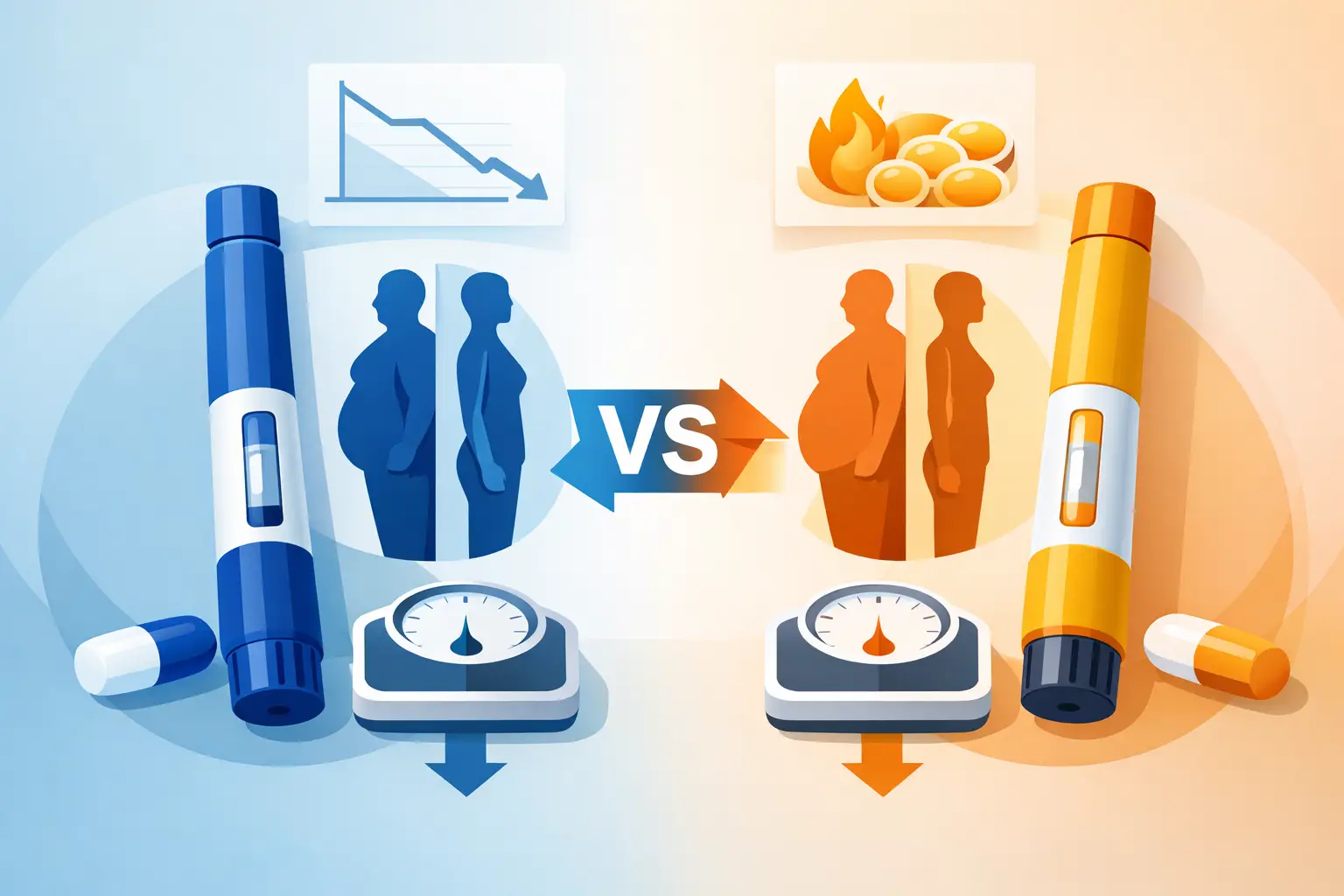
Choosing a medical weight-loss medication can feel like a high-stakes decision, especially when you have already tried to eat better, exercise more, and stay consistent without seeing the change you expected. When considering semaglutide versus tirzepatide weight loss, the right answer is not simply which medication produces the largest average result. It is which option fits your health history, lifestyle, budget, goals, and ability to maintain treatment over time.
Both medications can be valuable tools in a medically supervised plan. Neither replaces nutrition, movement, sleep, stress management, or ongoing primary care. Used thoughtfully, however, they can help reduce the intense hunger, cravings, and metabolic barriers that make sustainable weight loss feel out of reach.
How semaglutide and tirzepatide work
Semaglutide is a GLP-1 receptor agonist. GLP-1 is a natural hormone released after eating that helps signal fullness, slows stomach emptying, and supports insulin regulation. By mimicking this hormone, semaglutide may help you feel satisfied with less food, experience fewer food cravings, and better manage blood sugar.
Tirzepatide works on GLP-1 receptors too, but it also activates GIP receptors. GIP is another hormone involved in insulin response and energy regulation. This dual action is why tirzepatide is often described as a dual incretin medication.
In everyday terms, both medications can reduce appetite and support metabolic health. Tirzepatide has an additional pathway that may lead to greater average weight loss for some people. But average results from a study cannot predict exactly how your body will respond. Some patients do exceptionally well with semaglutide, while others find tirzepatide is a better match.
Semaglutide versus tirzepatide weight loss results
Clinical research has shown meaningful weight loss with both medications when they are paired with reduced-calorie nutrition plans and increased physical activity. In studies of people without diabetes using weight-management doses, semaglutide has been associated with average weight loss around 15% of starting body weight over roughly 68 weeks.
Tirzepatide trials have reported average weight loss in the range of about 15% to 21% of starting weight, depending on the dose and study design. A direct comparison study also found that tirzepatide produced greater average weight loss than semaglutide at the doses studied.
Those numbers are encouraging, but they should be interpreted carefully. Results vary based on dose, consistency, medical conditions, medications, age, eating patterns, activity level, sleep, and whether someone can stay on treatment long enough to reach an effective maintenance dose. Weight loss also does not happen in a straight line. Plateaus are common and do not mean the medication has stopped working.
For many patients, a clinically meaningful result is not about reaching a perfect number on the scale. Losing 5% to 10% of body weight can improve blood pressure, blood sugar, joint comfort, energy, mobility, and confidence. Larger losses may be possible, but the best plan is one that supports your health for the long term.
Which medication may be a better fit?
Tirzepatide may be worth discussing if your goal is greater average weight loss, if you have insulin resistance or type 2 diabetes, or if you did not get enough appetite or weight response with a GLP-1 medication alone. Its dual-hormone action can be particularly appealing for patients with significant metabolic concerns.
Semaglutide may be a strong choice for someone who prefers a well-established GLP-1 option, has responded well to GLP-1 therapy in the past, or has insurance coverage that makes it more accessible. It also has established cardiovascular benefit data for certain adults with overweight or obesity and cardiovascular disease.
Access matters more than many people realize. Coverage requirements, prior authorization rules, medication availability, and out-of-pocket costs can all shape the most practical option. A medication that is theoretically ideal but unaffordable or difficult to obtain consistently may not be the best long-term plan.
Your provider should also consider your personal medical history. A history of pancreatitis, gallbladder disease, severe digestive conditions, kidney concerns, diabetic retinopathy, or certain endocrine conditions may affect whether either medication is appropriate and how closely you should be monitored.
Side effects: similar, but personal
Semaglutide and tirzepatide have similar common side effects because both affect the GLP-1 pathway. Nausea, constipation, diarrhea, vomiting, indigestion, bloating, and fatigue can occur, especially when starting treatment or increasing the dose.
Many people tolerate these medications well when the dose is increased gradually. Smaller meals, eating slowly, prioritizing protein, drinking enough water, and avoiding very rich or greasy foods can reduce gastrointestinal discomfort. Constipation deserves attention early, since hydration, fiber, movement, and a provider-recommended bowel routine can make a meaningful difference.
Neither medication should be pushed faster than your body can tolerate. The goal is not to reach the highest dose as quickly as possible. The goal is to find an effective dose that you can sustain comfortably and safely.
Both medications carry important warnings and are generally not used in people with a personal or family history of medullary thyroid carcinoma or multiple endocrine neoplasia syndrome type 2. They are also not appropriate during pregnancy. If you use insulin, sulfonylureas, or other glucose-lowering medications, your plan may need adjustment to reduce the risk of low blood sugar.
The part medication cannot do alone
Weight-loss medications can quiet the constant mental noise around food. They cannot build muscle, create balanced meals, improve sleep habits, or address the emotional patterns that may influence eating. Those pieces still matter, particularly because preserving lean muscle during weight loss supports strength, function, and metabolic health.
A sustainable plan usually includes adequate protein, resistance training that matches your current ability, fiber-rich foods, hydration, and a realistic sleep routine. It also leaves room for travel, celebrations, busy workweeks, and imperfect days. Extreme restriction may produce short-term scale changes, but it rarely builds the confidence or habits needed to maintain results.
For patients in Central Florida and through eligible telehealth services, Radiate Healthy approaches medical weight management as an ongoing partnership. That means looking beyond the prescription to understand energy, hormones, chronic conditions, nutrition, activity, and the practical barriers that have made weight loss difficult.
What happens if you stop treatment?
This is one of the most important questions to ask before starting either medication. Obesity is a chronic, relapsing medical condition for many people, not a failure of discipline. When semaglutide or tirzepatide is discontinued, appetite signals can return and weight regain is common.
That does not mean everyone must take medication forever. Some people transition to a lower maintenance dose, switch medications, or eventually stop while maintaining much of their progress through strong routines and continued support. Others benefit from longer-term treatment, much like long-term medication for high blood pressure or diabetes.
The appropriate path depends on your health markers, side effects, response, preferences, and access. Planning for maintenance from the beginning is more helpful than treating medication as a short-term reset.
Questions to bring to your weight-management visit
A useful appointment should leave you with clarity, not pressure. Ask how each medication may interact with your current health conditions and prescriptions, what results are realistic for your starting point, how dose increases will be handled, and what symptoms warrant a call to the office.
It is also reasonable to ask how nutrition and muscle preservation will be supported, what monitoring you need, what your expected out-of-pocket costs may be, and what the plan would be if the first medication is not effective or well tolerated. Personalized care means having a path forward even when the first choice is not the final choice.
The most meaningful decision is not whether semaglutide or tirzepatide is “better” in general. It is choosing a medically appropriate plan that helps you feel stronger, healthier, and more at home in your body – with support that continues long after the first prescription.